
The world of personal finance often feels like walking into a massive, neon-lit buffet where everything looks enticing but the labels are written in a language only accountants speak. At the heart of this buffet sits the credit card—a tool that is often misunderstood, sometimes feared, but undeniably powerful when handled with a bit of savvy. Choosing the right one isn’t just about picking a shiny piece of plastic; it’s about finding a financial partner that aligns with a person’s lifestyle, spending habits, and long-term goals.
When someone first starts looking into the various Types of Credit Cards and Their Differences, the sheer volume of options can be overwhelming. There are cards that promise free flights to exotic islands, cards that give money back on every grocery run, and cards specifically designed for those who have stumbled in their credit journey and need a fresh start. The key to mastering this domain is realizing that no single card is “the best” for everyone. The “best” card is a highly subjective title that depends entirely on whether the user is a frequent flyer, a budget-conscious parent, or a student just learning the ropes of interest rates.
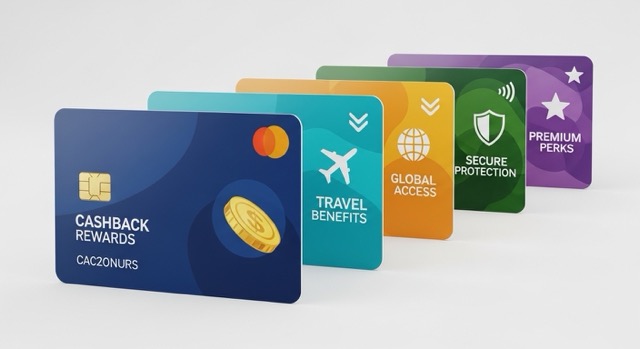
The Evolution of Plastic Power
Credit cards have come a long way from being simple “buy now, pay later” tokens. Today, they are sophisticated financial instruments. To truly appreciate the landscape, one must look beyond the credit limit and delve into the mechanics of rewards, interest structures, and security features. Understanding the nuances of Types of Credit Cards and Their Differences allows a consumer to turn an everyday expense into a strategic advantage. It’s about shifting the perspective from “How much can I spend?” to “How much can this card do for me?”
Rewards Cards: Getting Paid to Spend
If there is a rockstar category in the world of credit, it is undoubtedly the rewards card. These are the flashy performers that grab all the headlines. The premise is simple: for every dollar spent, the issuer gives something back. However, the “something” varies wildly, and this is where the strategy comes in.
The Allure of Cashback
Cashback cards are the pragmatists of the bunch. They appeal to the person who wants straightforward value without having to calculate point conversions or blackout dates for flights. Usually, these cards offer a flat percentage back on all purchases (like 1.5% or 2%) or tiered rewards where certain categories like gas and groceries earn more.
“Cashback is the ultimate ‘set it and forget it’ reward. It’s the financial equivalent of finding a twenty-dollar bill in your winter coat every time you pay your monthly statement.”
For many, the appeal lies in the transparency. Seeing a “Reward Balance” that translates directly into dollars and cents provides a psychological win. It feels like a discount on life itself. However, a common pitfall is spending more just to “earn” more cashback—a cycle that quickly negates any benefit if a balance is carried and interest starts accruing.
The Points and Miles Game
Then there are the Travel Rewards cards. These are for the adventurers, the dreamers, and the people who don’t mind spending a Saturday afternoon researching “sweet spots” in airline loyalty programs. Instead of cash, these cards earn points or miles.
| Feature | Cashback Cards | Travel Rewards Cards |
| Primary Value | Statement credits or direct deposits | Flights, hotel stays, upgrades |
| Complexity | Low – Very easy to understand | High – Requires research to maximize |
| Potential ROI | Moderate and consistent | High (if used for premium travel) |
| Best For | Everyday spenders | Frequent travelers and “optimizers” |
The true magic of understanding Types of Credit Cards and Their Differences in the travel sector is the concept of “transferable points.” Some high-end cards allow users to move their points to various airline and hotel partners. This flexibility is the “secret sauce” of the travel hacking world. One might use 50,000 points for a $500 domestic flight, or, with the right partner, a $3,000 business class seat to Europe. It’s a game of value maximization.
Personal Perspective: The Reward Trap
It’s worth noting that rewards cards are often a double-edged sword. There’s an undeniable rush when a “free” flight is booked using points accumulated over a year of grocery shopping. It feels like beating the system. But the reality is that these cards often come with higher interest rates. If a user carries a balance even for a couple of months, the interest paid will almost certainly outweigh the value of the rewards earned. The golden rule here is: if you aren’t paying the balance in full every month, a rewards card is actually costing you money, not saving it.
Low-Interest Cards: The Safety Net
While rewards cards get the glitz and glamour, Low-Interest Cards (often called “Plain Vanilla” cards) are the reliable workhorses. These cards don’t usually offer points or cashback. Instead, they offer a lower Annual Percentage Rate (APR).
Who Are They For?
These cards are designed for a specific type of consumer: the one who knows they might need to carry a balance from time to time. Life is unpredictable. Cars break down, medical emergencies happen, and sometimes the monthly budget just doesn’t stretch far enough. In these scenarios, a low-interest card is a godsend.
When analyzing Types of Credit Cards and Their Differences, the low-interest card stands out as a debt-management tool. Many of these cards also feature “0% Intro APR” periods for 12 to 21 months. This is a powerful window of opportunity for someone looking to consolidate high-interest debt from other cards or to finance a large, necessary purchase without losing money to interest.
The Value of Simplicity
There is something deeply underrated about a card that doesn’t demand your attention. You don’t have to track “rotating categories” or worry about points expiring. You just have a line of credit that doesn’t punish you excessively for using it. For someone focusing on debt reduction or financial stability, the peace of mind offered by a lower interest rate is far more valuable than a few airline miles.
Secured Credit Cards: The Foundation Builders
Not everyone starts their financial journey with a perfect credit score. Some are starting from zero (like students or recent immigrants), and others are recovering from past financial mistakes. This is where Secured Credit Cards enter the picture.
How the “Security” Works
Unlike traditional cards, a secured card requires a refundable security deposit. Usually, the deposit amount becomes the credit limit. For example, if a person provides $500, they get a card with a $500 limit.
- Collateral: The deposit acts as a safety net for the bank.
- Reporting: The issuer reports the payment history to credit bureaus.
- Transition: After a period of responsible use, many issuers “graduate” the user to an unsecured card and return the deposit.
Understanding the role of secured cards within the Types of Credit Cards and Their Differences is crucial for anyone looking to build a solid financial future. It’s not a permanent solution, but a stepping stone.
The Psychological Shift of Building Credit
Using a secured card requires a unique mindset. It’s a disciplined practice of “borrowing from yourself” to prove to the world that you are trustworthy. There’s a certain quiet pride in seeing a credit score climb from the low 500s into the 700s simply by using a secured card for a small monthly subscription and paying it off instantly. It’s a game of patience and consistency.
Choosing the Right Type: A Personalized Strategy
Choosing between the various Types of Credit Cards and Their Differences is a lot like buying a pair of shoes. You wouldn’t wear high-heels to a marathon, and you wouldn’t wear muddy hiking boots to a wedding. Your financial “footwear” needs to match the terrain of your life.
Assessing Spending Habits
The first step in choosing is a cold, hard look at the bank statements. Where does the money go?
- The Commuter: If a huge chunk of the budget goes to gas and tolls, a card with 3-4% back on transit is the winner.
- The Homebody: If most spending happens at the supermarket and on streaming services, a card tailored to “U.S. Supermarkets” is the way to go.
- The Debt-Fighter: If there is existing debt, ignore rewards entirely and find the longest 0% APR balance transfer card available.
Matching the Card to the Profile
| Profile | Recommended Card Type | Why? |
| The Student | Student Credit Card | Lower entry barriers and “good grade” rewards. |
| The Business Owner | Business Credit Card | High limits and tools to track employee spending. |
| The Rebuilder | Secured Credit Card | Guaranteed approval to help fix credit history. |
| The High Roller | Premium Travel Card | Luxury perks like lounge access that justify a high annual fee. |
The “Annual Fee” Debate
One of the most debated aspects of Types of Credit Cards and Their Differences is the annual fee. Some people refuse to pay a single cent for the “privilege” of spending their own money. Others happily pay $695 a year for a card. Who is right?
Both can be, depending on the math. If a card costs $95 a year but gives a “free” hotel night worth $250 every anniversary, the user is technically $155 ahead. However, if the card’s perks aren’t being used, that fee is a leak in the financial bucket. Always do the math: Expected Annual Value – Annual Fee = Real Benefit.
The Subtle Art of Credit Management
Once a person understands the Types of Credit Cards and Their Differences, the focus shifts to management. Possessing a tool is one thing; using it skillfully is another. Credit cards are often vilified as “debt traps,” but a hammer can either build a house or smash a thumb—it all depends on the person holding it.
The Myth of “Don’t Use Credit”
There is a school of thought that suggests avoiding credit cards entirely. While this “cash only” lifestyle prevents debt, it also leaves a lot on the table. In modern society, a credit score affects insurance premiums, the ability to rent an apartment, and even job prospects in some industries. Using the right Types of Credit Cards and Their Differences to your advantage is about building a “financial resume.”
Unique Perspective: The Empowerment of the Limit
Most people see a credit limit as a temptation. An alternative view is to see it as a “financial buffer.” When someone uses a credit card for a purchase, they are using the bank’s money for 30 days interest-free. This keeps their own cash sitting in a high-yield savings account for longer, earning interest. This “float” is a tiny optimization, but over a lifetime, these tiny wins add up to significant financial literacy and wealth.
Conclusion: Matching the Card to Your Profile
The journey through the world of credit doesn’t have to be a confusing or stressful experience. By breaking down the Types of Credit Cards and Their Differences, the path becomes clear. It’s about honesty—being honest about spending habits, honest about the ability to pay back debt, and honest about what goals truly matter.
Whether it’s the thrill of earning a free trip to Tokyo, the security of a low-interest rate during a job transition, or the steady climb of a credit score through a secured card, there is a perfect match for everyone. The credit card is not the enemy; it’s a reflection of financial habits. When chosen wisely and used with discipline, it becomes one of the most powerful allies in a person’s quest for financial freedom and flexibility.
In the end, the best card isn’t the one with the highest limit or the prettiest design. It’s the one that makes the user feel in control of their money. So, take a look at the options, weigh the pros and cons, and choose the card that fits your life today—and the life you want to build tomorrow.